Spain opened its rail market to competition in 2021, and Madrid–Málaga joined in later — iryo since 2023, Ouigo since December 2025. Compare Renfe AVE, Ouigo, iryo and Avlo below, then book whichever wins for your date.
Spain opened its high-speed rail market to competition in 2021, and Madrid to Malaga is one of the routes where it shows most — though iryo only added this route in 2023 and Ouigo in December 2025. Journey time depends on the operator and stops — the fastest non-stop Renfe AVE departures cover the 416 km in about 2 hours 30 minutes at speeds up to 310 km/h (193 mph), while the average trip across all four operators runs closer to 2 hours 44 to 50 minutes. Combined, trains run roughly every 60 to 120 minutes throughout the day, with Renfe alone running around 17 departures. Fares on the same date can differ a lot between operators too, so the fastest train and the cheapest train aren't always the same one.
Spain's flagship operator — most departures, Estándar and Confort classes, full station network.
French budget operator, an SNCF subsidiary — single class, simple flat fares, often the cheapest seat.
Spain's newest private operator, a joint venture with Italy's Trenitalia — three fare tiers: Inicial, Elige, Singular.
Renfe's own budget brand — same trains as AVE, no-frills fare, vending machine instead of a buffet car.
| Operator | Journey time | Fare (from) | Classes |
|---|---|---|---|
| Renfe AVE | ~2h 30m | $40 | Estándar, Confort |
| Ouigo | ~2h 44m | $10 | Single class |
| iryo | ~2h 35–45m | $12 | Inicial, Elige, Singular |
| Avlo | ~2h 30–44m | $8 | Single class |
Prices are approximate one-way fares in US dollars, converted from the real euro fare — the average one-way ticket works out to roughly $41, though promotional fares on Ouigo and Avlo can dip to around $8, and Renfe's flexible Confort fares can run up to $162. The cheapest tickets are generally found 60 to 90 days before departure, midweek departures tend to cost a little less than weekends, and prices climb sharply closer to the travel date.
Tickets can be bought at self-service machines or a staffed ticket office at either station, or booked online in advance with a QR code or mobile ticket sent to your phone — no need to print anything or queue at a counter. Most fare types allow a refund or change for a fee: the cheapest Ouigo and Avlo tiers are usually non-refundable, while Renfe's flexible fares and iryo's Singular tier allow free or low-cost changes.
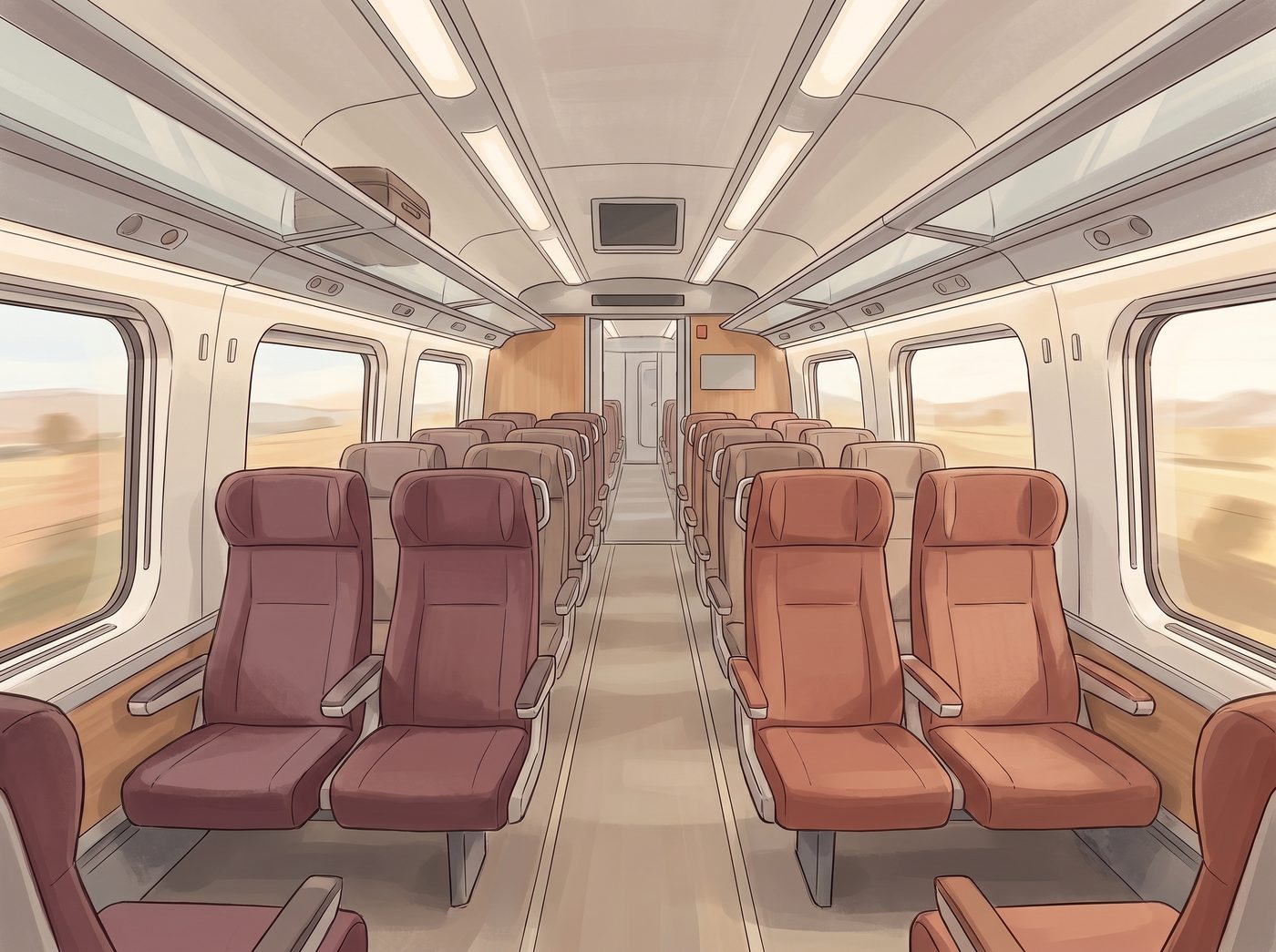
Renfe's standard class, formerly Turista — comfortable 2-2 seating and a power outlet at every seat. Covers most seats on a typical AVE train.
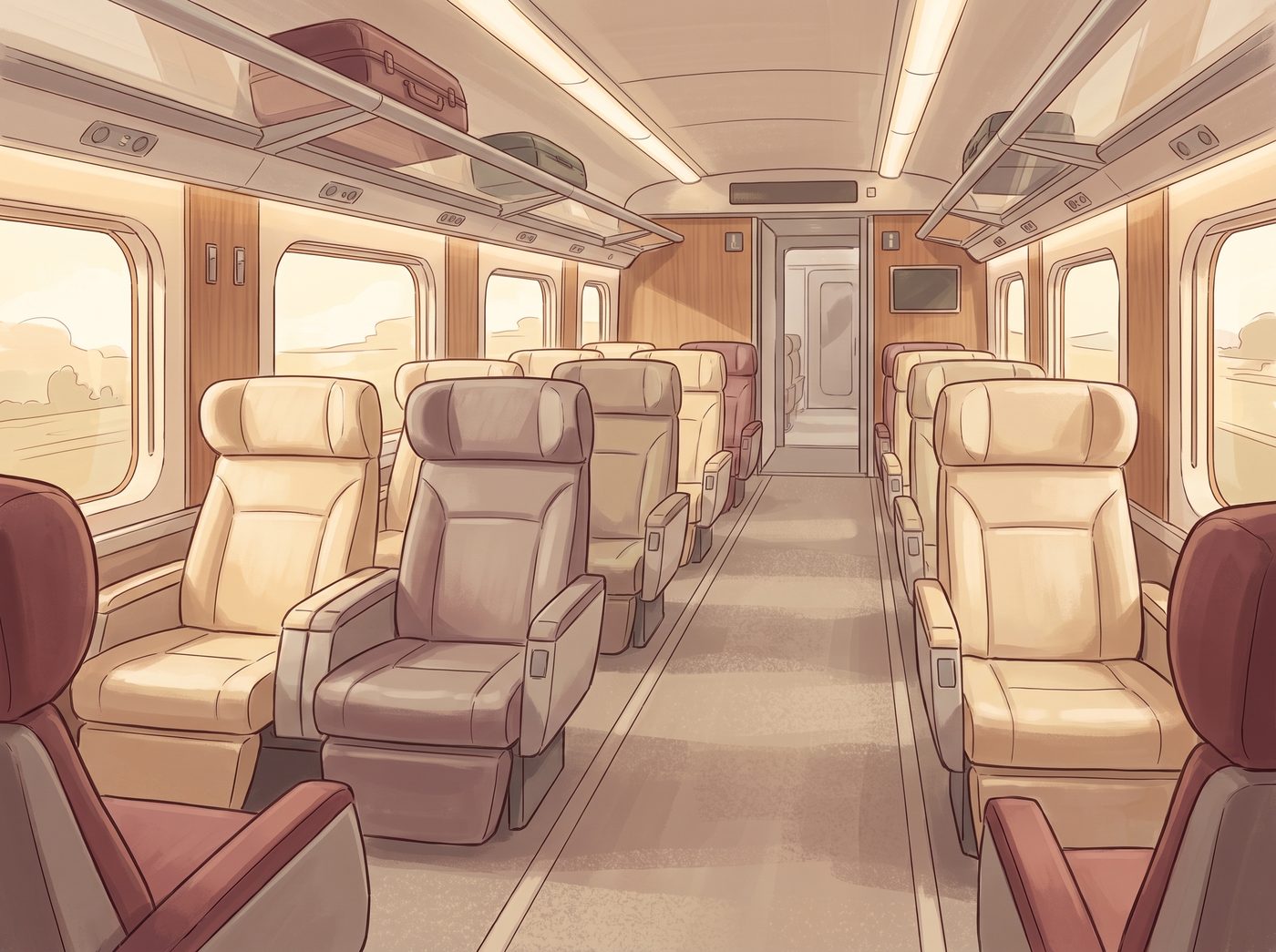
Renfe's upper class, formerly Preferente — wider seating, a quieter cabin, and on Premium fares an included at-seat meal and drink.
Ouigo and Avlo each keep a single standard class, while iryo instead sells three fare tiers — Inicial, Elige and Singular — bundling flexibility and onboard service rather than a separate physical class; Singular, iryo's top tier, includes at-seat catering and extra legroom roughly comparable to Renfe's Confort.
Free Wi-Fi, power outlets and air conditioning are standard across most high speed trains on this route. Renfe AVE runs a buffet carriage with hot and cold drinks and food, iryo brings meals to your seat on its higher tiers, and Ouigo and Avlo keep it simpler with a vending machine instead of a buffet car.
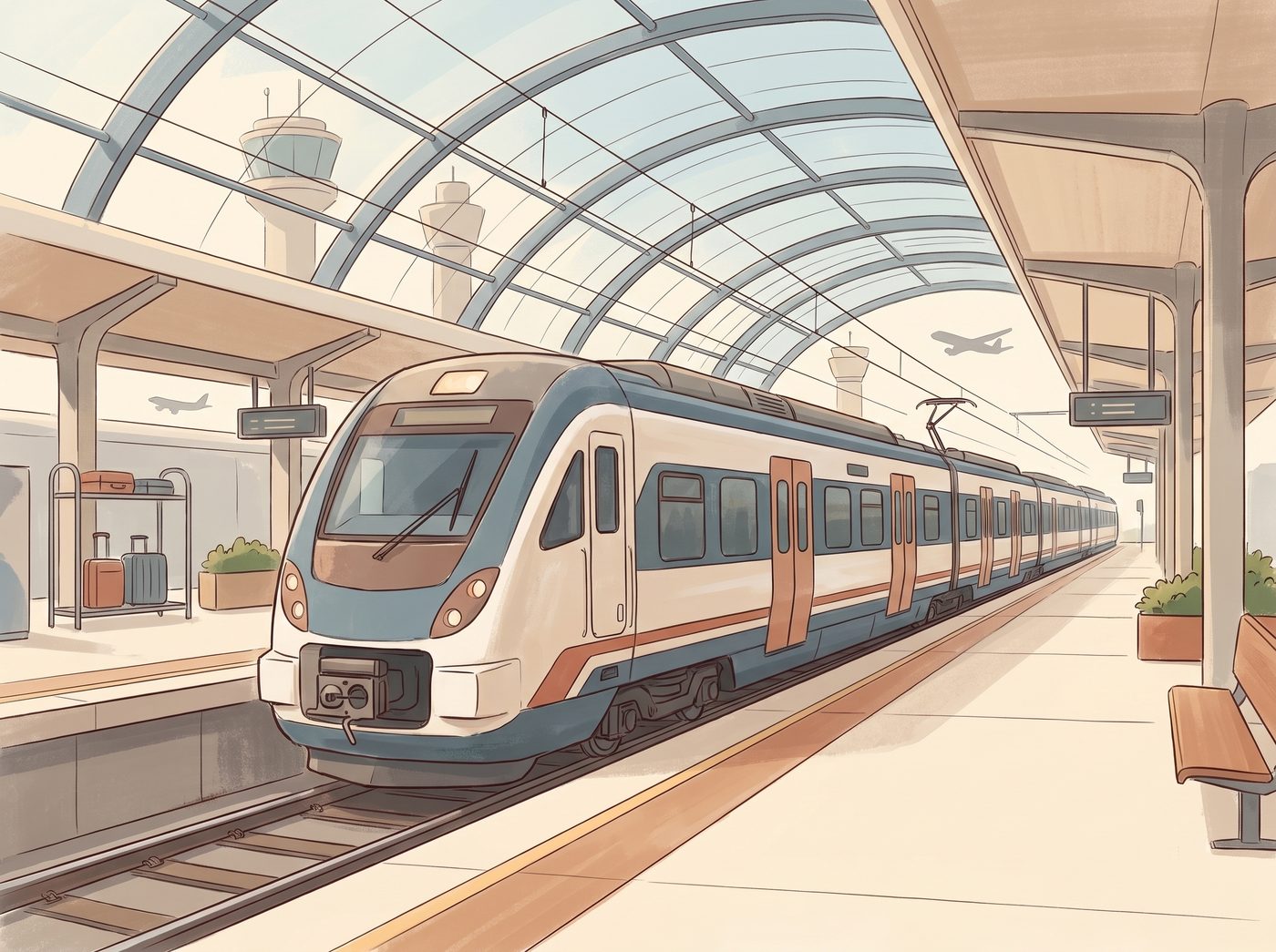
Departure station for every operator, with its own high-speed platforms separate from the commuter and regional ones. Central Madrid, with metro and cercanías connections.
No direct rail link from Barajas — connect into central Madrid first, then board at Atocha, about 30–40 minutes door to door.
All services arrive here, a short ride from the historic centre, with onward buses and regional trains.
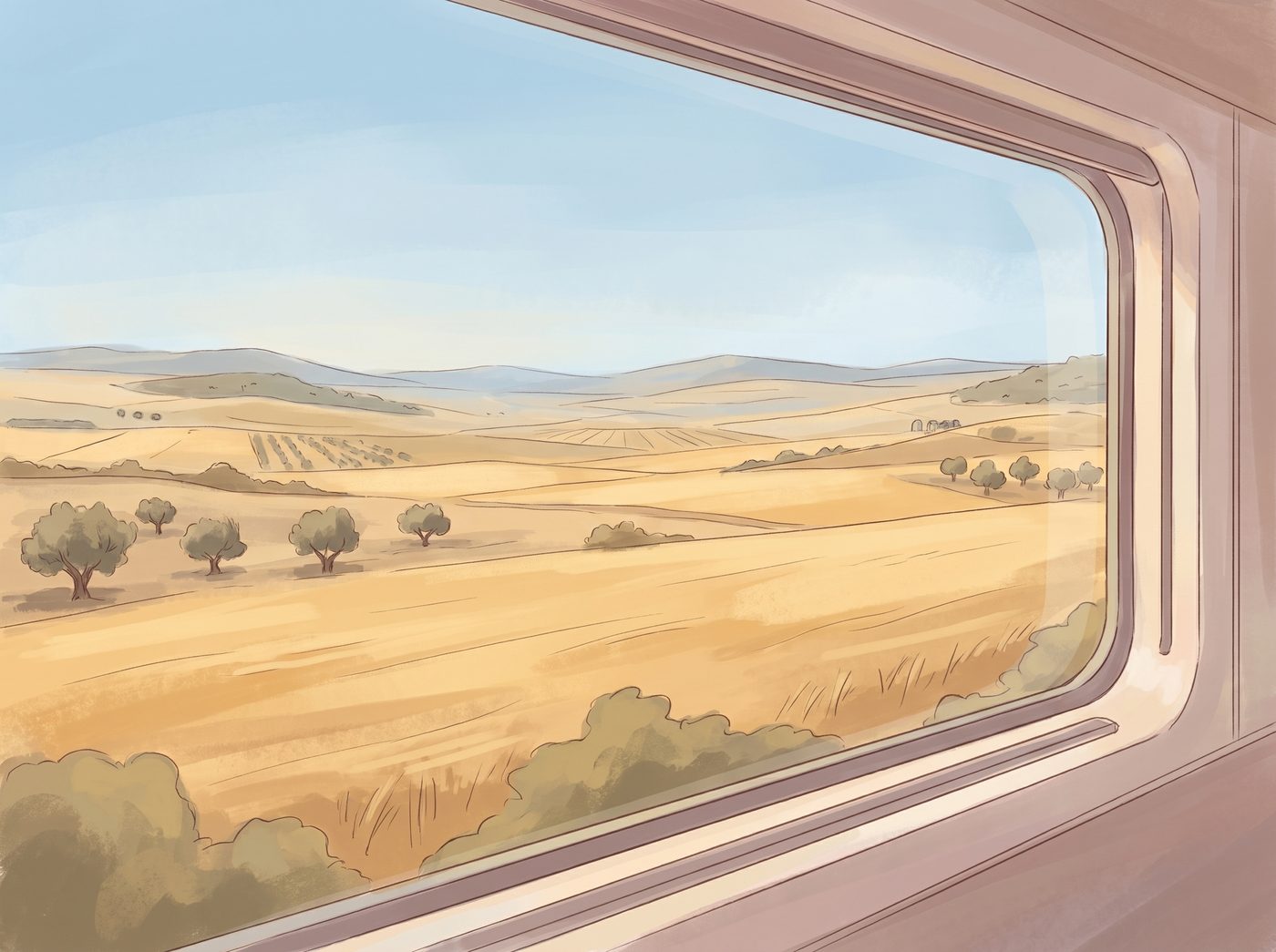
The line leaves Madrid across the flat golden plains of Castilla-La Mancha, Don Quixote's country.
Between Puertollano and Córdoba it climbs into the Sierra Morena on a chain of tunnels and viaducts, crossing from the Castilian plateau into Andalusia.
A second mountain stretch between Córdoba and Málaga carries the Arroyo de las Piedras viaduct — at 93.4 metres, the highest on the line — before the route drops through olive country to the Mediterranean.
Several trains stop briefly in Córdoba, roughly halfway along the route, where travelers with extra time sometimes break their journey for the Mezquita-Catedral; Antequera-Santa Ana serves as another stop on the high-speed network.
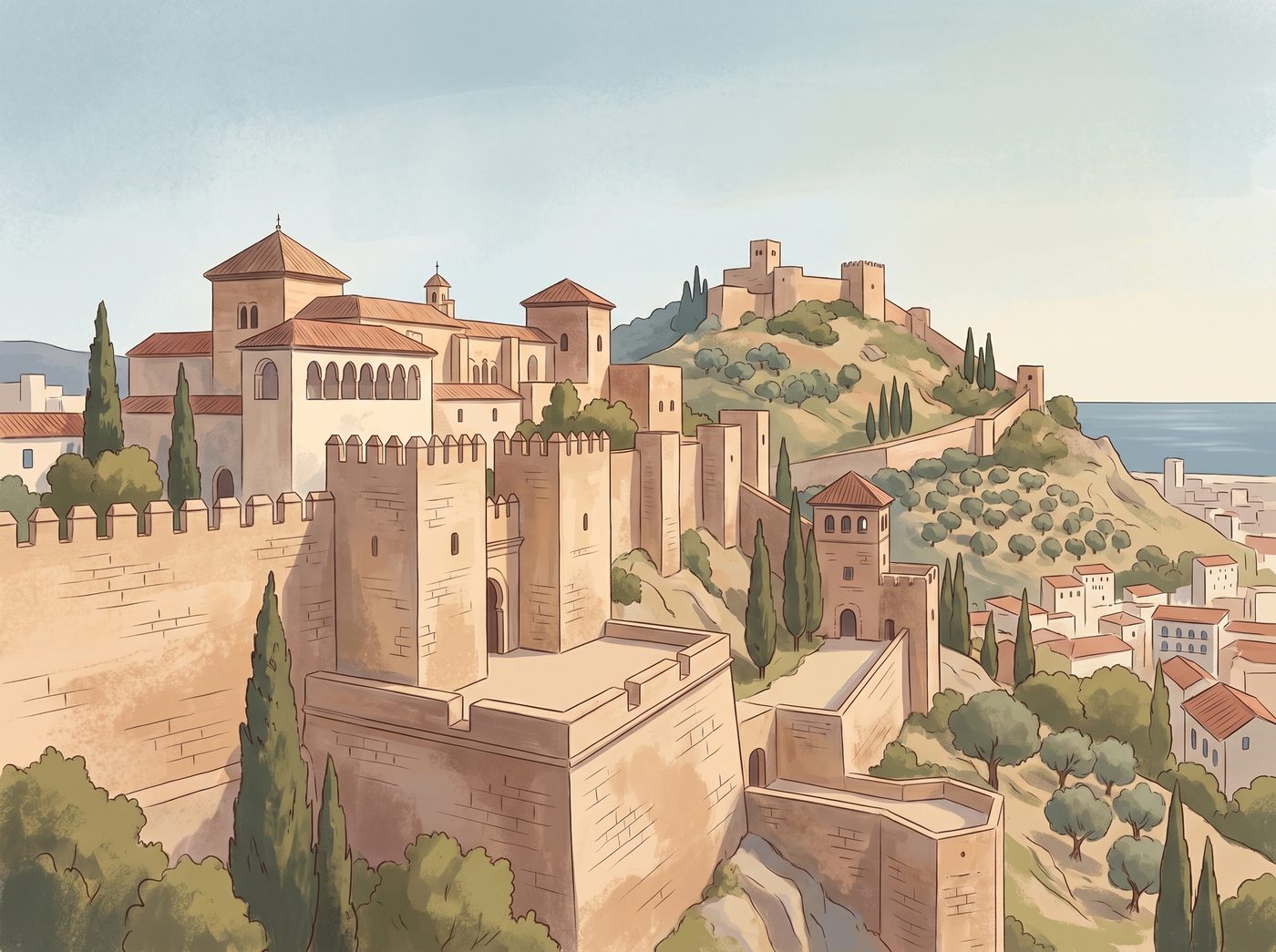
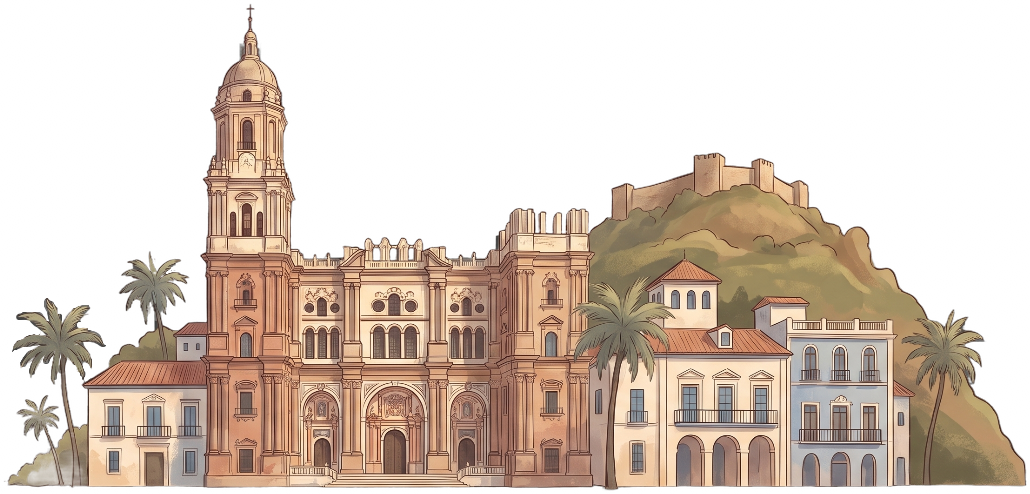
Málaga's historic centre sits a short walk from María Zambrano station, anchored by the Alcazaba fortress and Gibralfaro Castle above it.
The Museo Picasso Málaga holds close to 300 works by the city's most famous native son. Málaga Cathedral, nicknamed "La Manquita" for its unfinished tower, and the Atarazanas Market round out a walkable day.
Málaga also averages over 300 days of sunshine a year, part of why the Costa del Sol draws visitors well beyond the summer months.
Hand luggage and one cabin suitcase are typically included in the base fare on all four operators — larger items may need an additional fee, so check the size limits before you travel. Travelers with a small pet or a musical instrument should confirm requirements in advance, and reduced-mobility passengers or those travelling with a guide dog can request assistance through the operator they book with.
Renfe AVE offers around a 40% discount for children aged 3 to 14, plus further reductions for seniors and large families, and round-trip tickets usually cost less than two separate one-way fares. Around Spanish holidays and the summer beach season, book a seat a few hours ahead if traveling with family — the best-priced seats sell out first, and the first and last departures of the day (roughly 6–7am to 8–9pm) often carry the best fares.
The shortest travel time is about 2 hours 30 minutes on Renfe AVE. Ouigo and iryo are usually around 2 hours 44 minutes, and Avlo falls in a similar range since it uses the same trains.
It varies by date and how far ahead you book — Ouigo and Avlo are generally the lowest-cost options, but comparing all four for your specific travel date is worth the extra minute.
Yes — Renfe AVE, Ouigo, iryo and Avlo all run a direct connection between Madrid Atocha and Málaga María Zambrano, so you do not need to change trains.
Estándar is Renfe's standard 2-2 seating class. Confort offers wider seats, a quieter cabin, and on Premium fares an included at-seat meal and drink.
A reserved seat isn't strictly required on every fare type, but booking ahead — especially in peak season — guarantees your spot and usually costs less than booking at the last minute.
Hand luggage and one cabin suitcase are typically included at no extra cost. Larger items may need an additional fee, so check the size limits before you travel.
Yes — Renfe AVE offers around a 40% discount for children aged 3 to 14, plus further reductions for seniors and large families.
Málaga's historic centre, including the Alcazaba fortress, Gibralfaro Castle and the Museo Picasso Málaga, is a short walk from María Zambrano station.
Yes — power outlets and free Wi-Fi are standard across most high speed trains on this route, whichever operator you choose.
The line crosses the Sierra Morena between Puertollano and Córdoba, then a second mountain stretch between Córdoba and Málaga carrying the line's highest viaduct.
It depends on the fare tier — higher fares on Renfe and iryo's Singular tier usually allow free or low-cost changes, while the cheapest Ouigo and Avlo fares are often non-refundable.
Several Madrid to Malaga services make a brief stop in Córdoba, roughly halfway along the route just after the Sierra Morena crossing.